
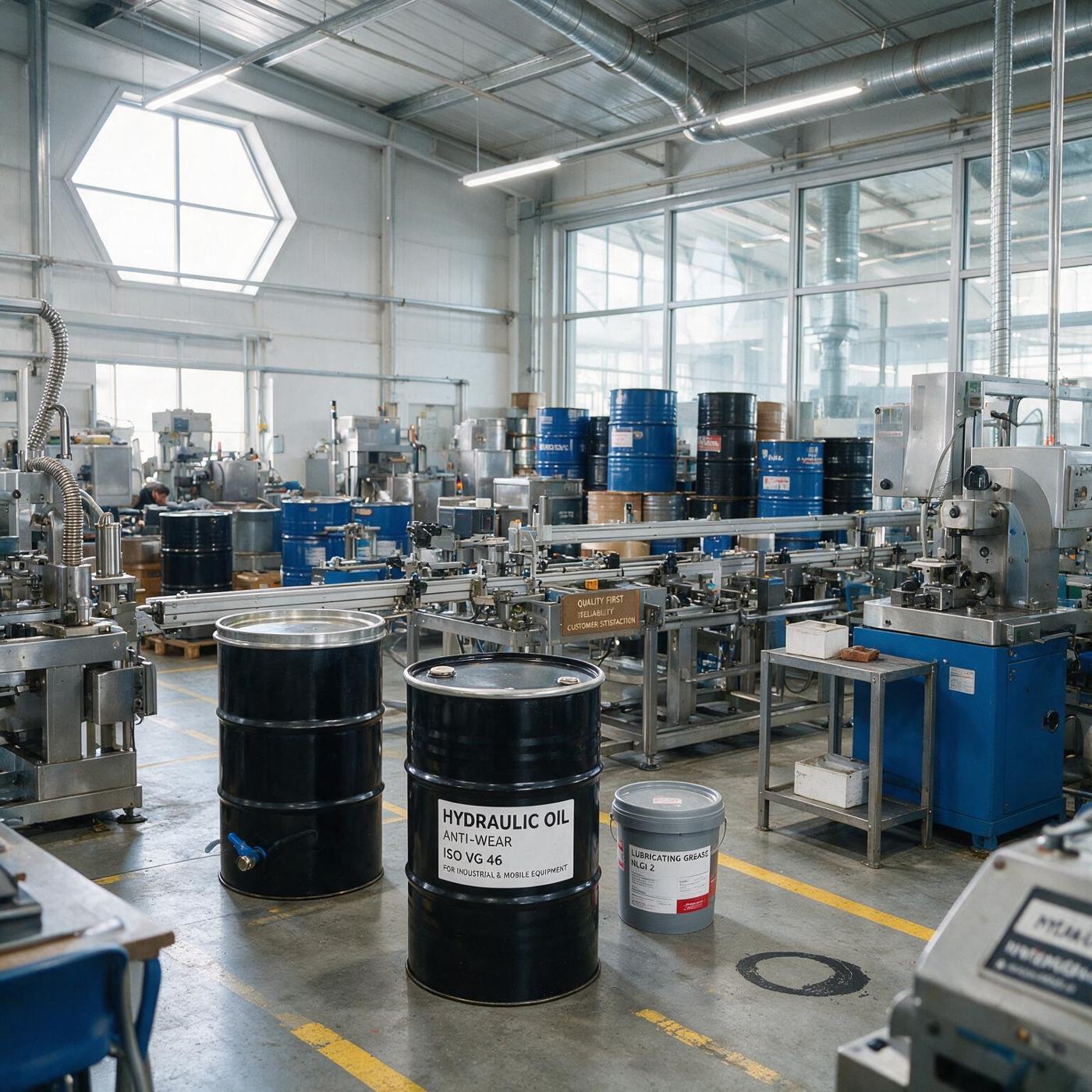
Launching a lubricant brand is relatively easy.
Building a lubricant brand that customers trust, distributors want to represent, and dealers are willing to recommend is much harder.
There are many lubricant products in the market. Many of them have similar viscosity grades, claim similar performance levels, and use similar packaging.
So why do some lubricant brands grow while others disappear after only a few years?
The answer is rarely just "better oil." A successful lubricant brand is usually built by combining:
- The right product
- The right market
- The right positioning
- The right supply chain
- Consistent quality
- Reliable distribution
- Customer trust
If you are planning to build your own lubricant brand, understanding these foundations before production begins can save years of trial and error.
1. Successful Lubricant Brands Start With a Clear Market
One of the biggest mistakes new brands make is trying to sell to everyone. A new brand may say "our lubricants are for every vehicle and every customer" — but broad positioning usually creates weak positioning.
A stronger starting point is to define exactly who you are serving, for example:
- Passenger-car owners
- Motorcycle riders
- Truck fleets
- Workshops
- Dealers
- Construction companies
- Industrial factories
- Agricultural customers
Then ask: what problem does that customer need solved? A workshop may care about:
- Product reliability
- Availability
- Dealer margin
- Technical support
A fleet operator may care more about:
- Equipment protection
- Drain intervals
- Operating cost
- Consistent supply
A successful brand understands the customer before it designs the product portfolio.
2. The Product Must Fit the Market
A lubricant can be technically excellent and still fail commercially — because technical quality alone does not guarantee market fit.
A market may prefer 10W-40 while another may be shifting toward 0W-20 or 5W-30. One market may be highly price-sensitive; another may accept premium synthetic products. One country may mainly use Japanese vehicles; another may have a high concentration of European vehicles or heavy-duty trucks.
That means product development should begin with vehicle population, climate, customer segment, price level, performance requirements and the competitor landscape.
The right product is not simply the best lubricant a factory can manufacture. It is the product your target market is ready to buy.
3. A Successful Brand Has a Clear Position
Customers need a reason to remember your brand. Are you:
Premium?
Focused on high-performance synthetic lubricants?
Value?
Offering reliable performance at competitive pricing?
Specialist?
Focused on motorcycles, trucks, industrial equipment or another niche?
Technical?
Built around engineering expertise and performance?
Distribution-Focused?
Designed around dealer support and availability?
A brand without a clear position often becomes "another lubricant brand" — and that is a difficult place to compete. A strong brand should be able to answer: why should a customer choose us instead of the brand next to us?
4. Quality Must Be Consistent, Not Just Good Once
A new brand may receive an excellent first sample — that does not automatically mean every future batch will match it. Successful lubricant brands need repeatability, which means controlling:
- Formulation
- Raw materials
- Batch consistency
- Packaging
- Labeling
- Testing
- Production records
The objective is not one good batch. It is the same expected quality every time. This is why manufacturer selection and quality-control systems are so important.
5. The Right OEM Manufacturer Matters
For brands using OEM or private-label production, the manufacturer becomes part of the brand's reputation. If the manufacturer delivers late, changes raw materials, produces inconsistent quality, makes packaging errors, or fails to prepare correct documents — the customer does not blame the factory. They blame your brand.
That is why OEM manufacturer selection should include more than price. Evaluate technical capability, quality system, production capacity, MOQ, lead time, export experience, communication, documentation and supplier reliability. A strong brand needs a manufacturing partner that can grow with it.
6. Packaging Must Support the Brand Position
Customers often see packaging before they experience the lubricant. Packaging communicates price level, quality perception, professionalism and brand personality.
A premium product in weak packaging creates doubt. A value brand with excessively expensive packaging can make the economics difficult. The packaging must fit target customer, price position and distribution channel — with consistent bottle design, color, labels, typography and product hierarchy across the range.
7. Distribution Is More Important Than Many New Brands Expect
You can have an excellent product, a beautiful bottle and a strong brand name — but if customers cannot easily buy the product, growth becomes difficult.
Lubricant distribution may involve:
- Importers
- Distributors
- Dealers
- Workshops
- Service centers
- Fleets
- Industrial accounts
- E-commerce
A successful brand asks where customers will actually buy the product, then builds the supply chain around that reality. Distribution is not a secondary activity — it is part of the product strategy.
8. Dealers Need a Reason to Sell Your Brand
Consumers may choose a lubricant once. Dealers and workshops can influence hundreds or thousands of purchasing decisions. Brand success often depends on whether the channel wants to support the product. Dealers may ask:
- Is the margin attractive?
- Is stock available?
- Will the company support promotions?
- Can we trust product quality?
- Will customers come back?
- Is technical support available?
- Will pricing remain stable?
A brand must therefore create value for both the end customer and the distribution partner.
9. Supply Reliability Builds Trust
A brand cannot become reliable if its supply chain is unreliable. Imagine a dealer begins recommending your product, sales increase, then you run out of stock for two months — the dealer may switch to another brand.
Successful lubricant brands need to manage demand forecasting, production planning, inventory, shipping and reordering. Customers notice availability; a product that is always out of stock is difficult to build into a trusted brand.
10. The Brand Needs a Sustainable Price Structure
Being cheaper than competitors is not a complete strategy. The price must support:
- Manufacturer cost
- Freight
- Import duties
- Warehousing
- Distributor margin
- Dealer margin
- Marketing
- Sales expenses
- Company profit
If the pricing structure is too tight, the brand may generate sales but still struggle financially. A sustainable price model should work for the manufacturer, brand owner, distributor, dealer and customer — every participant needs enough value to continue supporting the product.
11. Product Portfolio Discipline Matters
Successful brands do not automatically launch every product the factory can make. They build portfolios strategically, for example:
Hero Products
Products that generate the largest sales volume.
Supporting Products
Products customers expect the brand to carry.
Premium Products
Products that strengthen brand image or margin.
Specialty Products
Products serving specific customer segments.
This prevents the catalogue from becoming unnecessarily large and helps working capital stay under control.
12. Brand Trust Is Built Through Repetition
Trust does not come from one advertisement. It comes from repeated positive experiences: the product performs as expected, the packaging is consistent, the order arrives on time, the dealer has stock, the customer receives support, and the next batch performs the same.
Over time, those experiences become brand reputation. This is why branding is not only marketing — it is also product quality, operations, supply chain and customer service.
13. Technical Credibility Matters
Lubricants are technical products. Customers may ask:
- Which viscosity should I use?
- Which specification is suitable?
- What is the difference between products?
- Is this suitable for my vehicle?
- Why does this product cost more?
A brand that cannot answer technical questions may struggle to build confidence. Technical credibility can be supported through:
- Clear product data sheets
- Safety data sheets
- Product specifications
- Training materials
- Technical content
- Dealer education
- Professional customer support
A strong lubricant brand should not only sell products — it should help customers understand them.
14. Customer Feedback Must Reach Product Development
The first product portfolio is rarely perfect. Dealers may say customers want a 4-liter package; workshops may say they need a different viscosity grade; distributors may say a price point is difficult; customers may ask for a diesel version.
Successful brands listen, then use real market data to improve product, packaging, pricing, inventory and distribution. The market becomes part of the product-development process.
15. A Strong Supply Chain Protects the Brand
Behind every bottle of lubricant is a chain: raw materials → manufacturer → packaging → quality control → export → shipping → import → warehouse → distributor → dealer → customer.
A problem at any stage can affect the brand. This is why supply-chain management should not be treated as back-office administration — it is a strategic capability.
16. Successful Brands Think Beyond the First Order
The first shipment is important, but the second, tenth and fiftieth shipments are what build the business. From the beginning, think about:
- Reorder cycles
- Supplier performance
- Inventory planning
- Pricing history
- Quality history
- Backup suppliers
- Product expansion
- Customer retention
A successful lubricant business is not built around one production order. It is built around a repeatable business system.
17. The Brand Owner Must Own the Customer Relationship
Even if another company manufactures the product, the customer relationship belongs to the brand owner. You should understand:
- Who buys
- Why they buy
- What they complain about
- Which products they reorder
- Which price points work
- Which channels generate growth
Factories provide production capacity. Customers create enterprise value. That is why the strongest early investment may be in market knowledge, distribution and customer relationships.
The Formula for a Successful Lubricant Brand
There is no guaranteed formula, but strong lubricant brands tend to combine:
A Clear Market
Know exactly who you serve.
The Right Products
Build what the market needs.
Clear Positioning
Give customers a reason to choose you.
Reliable Manufacturing
Work with capable production partners.
Consistent Quality
Protect every batch.
Strong Distribution
Make the product available.
Sustainable Economics
Build enough margin for every part of the channel.
Reliable Supply Chain
Deliver consistently.
Customer Trust
Keep the promise over time.
Put together: market + product + brand + quality + distribution + supply chain + trust — and you have the foundation for long-term growth.
Want to Build a Lubricant Brand That Can Grow?
You may already have customers, distribution, automotive experience, a target country, a product concept, or simply an idea for your own lubricant brand.
The difficult part is connecting all the pieces: which products should you launch, which manufacturer should you use, how should the formulation be specified, what MOQ is practical, which packaging should you choose, how should quality be controlled, how do you calculate landed cost, and how will the product reach your market?
DA Global Sourcing helps businesses coordinate these stages through an end-to-end OEM and supply-chain approach. If you are planning your own lubricant brand, share with us:
- Target country
- Target customer
- Products required
- Estimated quantity
- Packaging requirements
- Target price, if available
- Current project stage
We can help you evaluate the manufacturing and supply-chain structure behind the brand.