
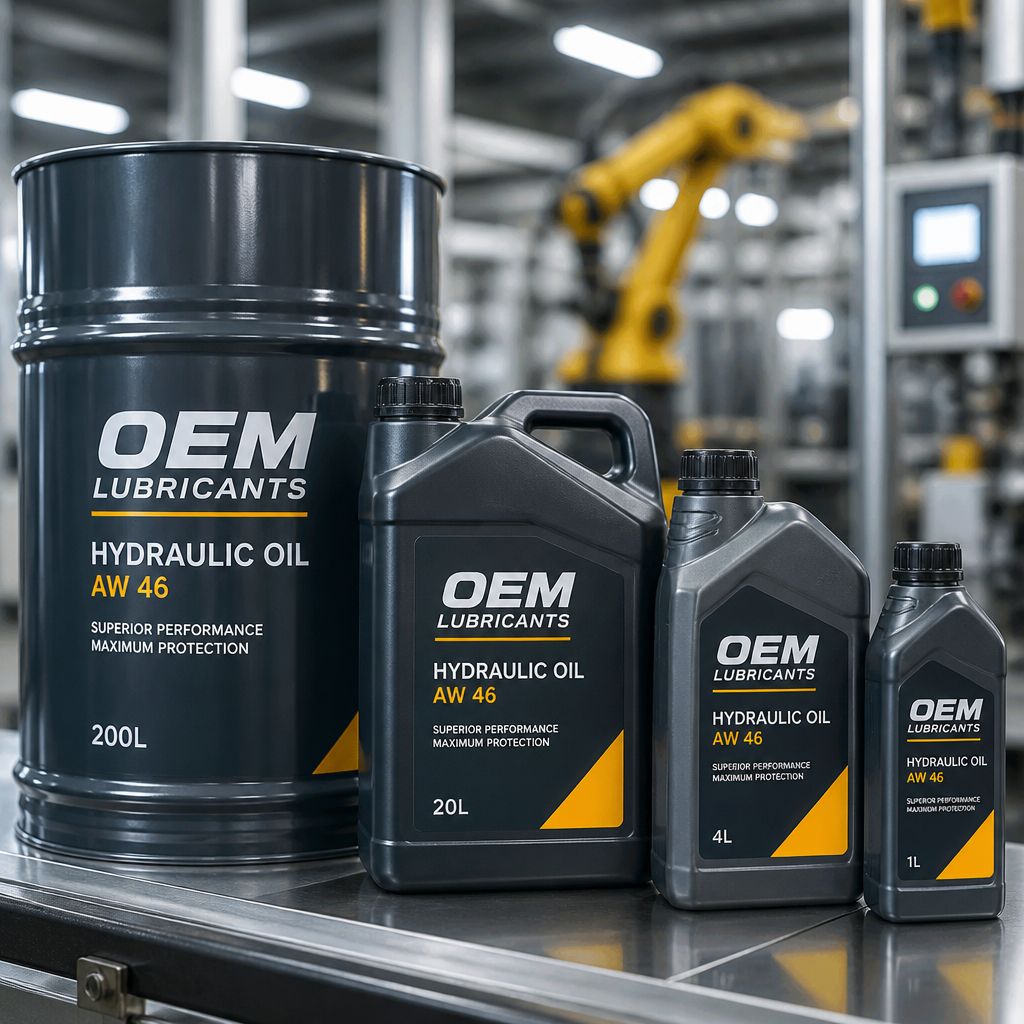
The global lubricant market continues to grow as demand for automotive and industrial lubricants increases across emerging and established markets. As a result, more distributors, trading companies, and investors are choosing to launch their own private label lubricant brands instead of relying solely on established international brands.
One of the first questions every new brand owner asks is:
"How much does it cost to launch a lubricant brand?"
The answer depends on several factors, including product range, production volume, packaging requirements, certifications, and marketing strategy. The good news is that modern OEM and ODM manufacturing has significantly reduced the investment required to enter the market.
This article explains the major cost components involved in building a successful lubricant brand and how manufacturers can help customers minimize startup costs.
1. Product Development Costs
The first investment involves selecting or developing the right lubricant products.
Depending on the business model, customers may choose:
- Passenger Car Motor Oil
- Heavy Duty Diesel Engine Oil
- Motorcycle Engine Oil
- Hydraulic Oil
- Gear Oil
- Transmission Fluid
- Industrial Lubricants
- Greases
- Specialty Lubricants
Most OEM manufacturers already offer proven formulations that comply with international standards such as API, ACEA, and JASO. Using existing formulations allows customers to launch products faster while avoiding unnecessary research and development expenses.
For customers requesting customized formulations, additional laboratory testing and product validation may increase development costs.
2. Branding and Packaging Investment
Launching a lubricant brand is about much more than filling bottles with oil.
Professional branding includes:
- Brand name development
- Logo design
- Product label design
- Bottle design
- Carton packaging
- Product catalogues
- Corporate profile
- Website development
- Marketing materials
High-quality packaging creates stronger customer confidence, improves shelf visibility, and supports long-term brand recognition in highly competitive markets.
3. Manufacturing Costs
Manufacturing represents the largest portion of the initial investment.
Typical production costs include:
- Base oils
- Additive packages
- Plastic bottles
- Caps and closures
- Labels
- Cartons
- Filling and packaging
- Quality inspection
- Production labor
The final cost depends on several variables:
- Product specifications
- API performance level
- SAE viscosity grade
- Packaging size
- Bottle type
- Production volume
- Raw material prices
Higher production volumes generally result in lower unit costs due to economies of scale.
4. Quality Testing and Certifications
International buyers increasingly expect lubricant products to meet recognized technical standards.
Depending on the target market, manufacturers may need to provide:
- API Performance Standards
- ACEA Specifications
- JASO Certifications
- ISO 9001
- ISO 14001
- Technical Data Sheet (TDS)
- Material Safety Data Sheet (MSDS/SDS)
- Certificate of Analysis (COA)
These documents enhance customer confidence and facilitate export procedures in many countries.
5. Trademark Registration
Protecting intellectual property is an essential step when launching a lubricant brand.
Trademark registration helps businesses:
- Protect brand identity
- Prevent unauthorized use
- Build long-term brand value
- Strengthen international market expansion
Although trademark registration represents only a small portion of the total investment, it is one of the most valuable long-term assets.
6. Marketing and Sales Costs
Even the highest-quality lubricant products require effective marketing to reach customers.
Typical marketing investments include:
- Corporate website
- SEO optimization
- Digital advertising
- Social media marketing
- Product videos
- Technical brochures
- Distributor support materials
- International exhibitions
- Sales presentations
A well-planned marketing strategy enables new lubricant brands to compete on value rather than price alone.
7. Logistics and Export Costs
For export-oriented businesses, logistics should be included in the initial budget.
Typical expenses include:
- Ocean freight
- Inland transportation
- Export documentation
- Customs clearance
- Cargo insurance
- Warehousing
- Container loading
Experienced OEM manufacturers often provide export support that helps customers simplify international shipments.
8. How OEM & ODM Manufacturing Reduces Startup Costs
One of the biggest advantages of OEM and ODM manufacturing is the ability to enter the lubricant market without building a production facility.
By partnering with an experienced manufacturer, customers can:
- Eliminate factory construction costs
- Avoid expensive production equipment
- Access proven lubricant formulations
- Reduce technical risks
- Shorten product launch timelines
- Focus on sales and market development
This business model has enabled thousands of successful lubricant brands worldwide to grow with significantly lower capital investment.
Why International Customers Choose DA Global Sourcing
At DA Global Sourcing, we work closely with qualified lubricant manufacturers to provide complete Private Label Lubricant Solutions for customers worldwide.
Our services include:
- Product consultation
- OEM & ODM manufacturing
- Customized formulations
- Brand development
- Packaging design
- Technical documentation
- Quality control
- Export coordination
- International sourcing support
Whether you are launching your first lubricant brand or expanding an existing product portfolio, our team helps simplify the process while reducing both cost and risk.
Conclusion
Launching a lubricant brand does not necessarily require a large manufacturing investment. With the right OEM or ODM partner, companies can introduce high-quality lubricant products under their own brand while minimizing capital expenditure.
Success depends on selecting experienced manufacturing partners, developing a strong brand identity, maintaining product quality, and implementing an effective market strategy.
If you are planning to build your own lubricant brand, DA Global Sourcing is ready to support your journey from concept to commercial success.