
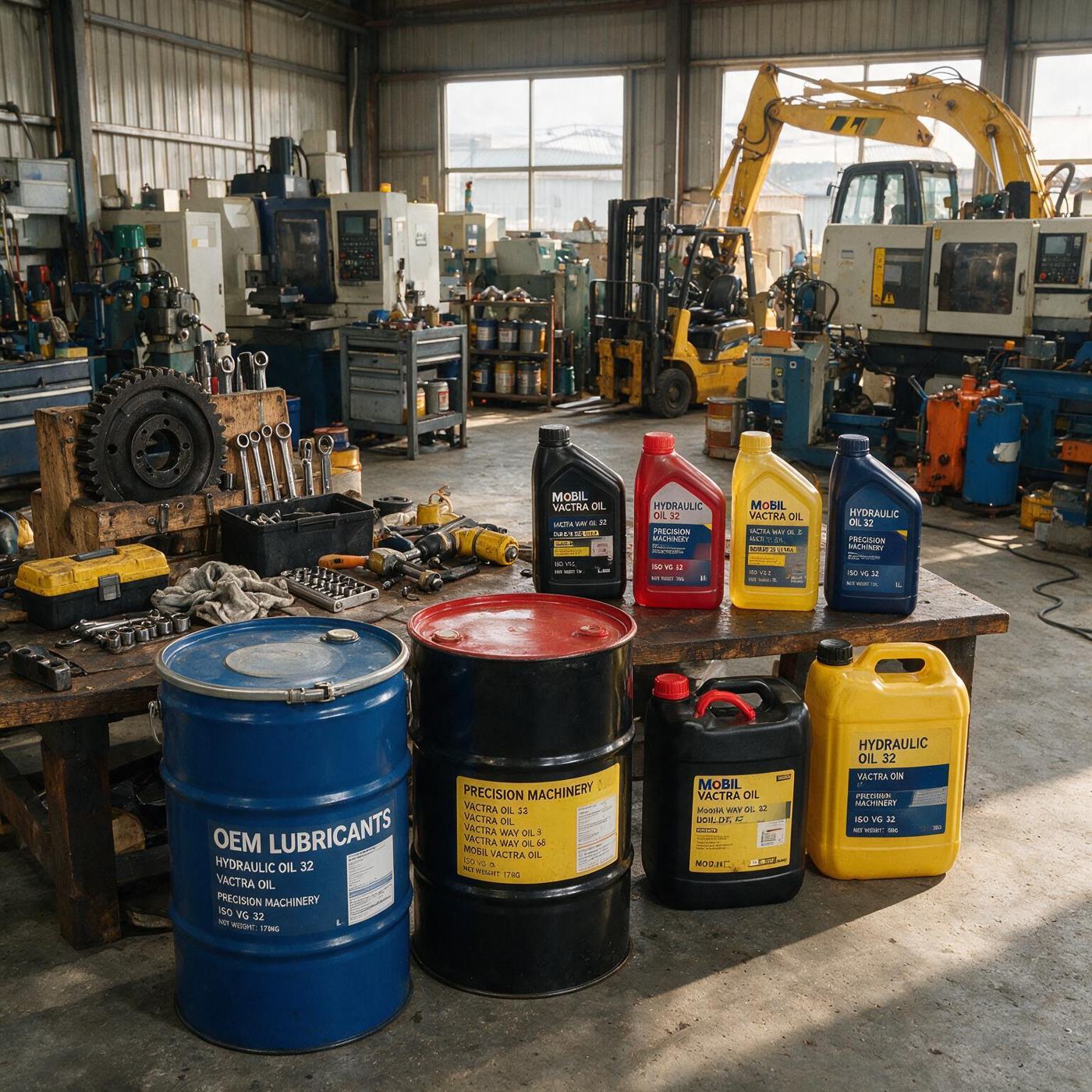
If you run a small business, distribute automotive parts, operate workshops, sell lubricants, manage a fleet, or simply see an opportunity in your local automotive market, you may have asked yourself: can a small business actually launch its own lubricant brand?
The short answer is yes. You do not necessarily need to build a blending plant, install filling lines, or invest in your own manufacturing facility from day one. Through OEM lubricant manufacturing and private label lubricants, small and medium-sized businesses can work with established manufacturers to develop lubricant products sold under their own brands.
However, getting the product manufactured is only one part of the business. To build a sustainable lubricant brand, you need to understand your target market, customers, product portfolio, budget, margins, and distribution strategy before placing your first major order.
What Are Private Label Lubricants?
Private label lubricants are lubricant products manufactured by one company and marketed under another company's brand. Imagine you operate several automotive workshops — today you may purchase and resell motor oils from established brands, but with a private label model you could develop your own line of engine oils and sell them under a brand you own.
Your manufacturing partner handles the agreed production activities, while you focus on building the brand and developing the market. This model can reduce one of the biggest barriers to entering the lubricant industry: manufacturing infrastructure.
Why Can Private Label Work for Small Businesses?
Large lubricant companies benefit from enormous production capacity, international recognition, marketing budgets, and established distribution networks. A small company cannot realistically replicate those resources immediately — but it does not necessarily need to. An independent lubricant brand can focus its resources on:
- Brand ownership
- Local distribution
- Dealer relationships
- Customer acquisition
- Marketing
- Market knowledge
- Specialized niches
Meanwhile, an OEM or private label lubricant manufacturer can provide the manufacturing capabilities required to bring the products to market — creating a more accessible path for entrepreneurs and SMEs interested in entering the lubricant business.
Which Small Businesses Are Best Positioned to Launch a Lubricant Brand?
Capital is important, but having access to customers can be even more valuable. Several types of businesses may already possess an advantage.
Lubricant Distributors
If you already distribute lubricant products, you understand what dealers buy, which grades move quickly, how pricing works, and what customers request — market knowledge that can be extremely valuable when developing your own brand.
Automotive Parts Distributors
Lubricants can complement an existing automotive aftermarket product portfolio, and you may already have relationships with workshops, retailers, and distributors that could become potential customers.
Workshops and Garage Chains
Workshops have direct access to lubricant users. Instead of relying exclusively on third-party brands, some workshop businesses may consider developing their own product lines as their customer base grows.
Fleet Operators
Companies managing large vehicle fleets may explore private label opportunities when their lubricant consumption becomes large enough to justify the economics.
Importers and Trading Companies
If you understand a particular country or regional market and already have distribution relationships, outsourcing production can be more practical than investing in manufacturing infrastructure.
Do You Need a Large Product Range?
No — in fact, launching too many products can create unnecessary risk for a small business. It may be tempting to offer 0W-20, 0W-30, 5W-20, 5W-30, 5W-40, 10W-30, 10W-40, 15W-40 and multiple packaging sizes all at once, but every additional SKU creates additional requirements for inventory, packaging, working capital, forecasting, warehouse space and inventory management.
A smaller business may benefit from starting with a focused product portfolio — identify the products with the strongest demand in your target market and build your initial range around them. You can expand later when actual sales data supports the decision.
Is MOQ a Major Challenge for Small Lubricant Brands?
It can be. MOQ (Minimum Order Quantity) is one of the most important factors to evaluate when selecting a private label lubricant manufacturer. MOQ requirements may vary depending on product formulation, base oils and additives, packaging size, bottle or container type, labels, cartons, number of SKUs, customization requirements and manufacturer policies.
For a startup brand, high MOQs can create a significant inventory commitment before the market has been properly tested. Don't ask a potential manufacturer only "what is your price per liter?" — also ask "what is the MOQ per SKU, and what would my total initial order value be?" Two suppliers offering similar unit prices can create completely different startup capital requirements because of their MOQ structures.
How Much Capital Do You Need to Start a Lubricant Brand?
There is no universal figure. The required investment depends on target country, product specifications, number of SKUs, order quantity, packaging, branding and design, freight, import duties and local compliance requirements, warehousing, marketing, distribution development and working capital.
For a small business, a better question may be: "what is the smallest commercially viable product portfolio I can launch to test the market?" This is essentially a Minimum Viable Product approach applied to a lubricant brand — start focused, collect real market feedback, identify your best-selling products, and then decide where to invest additional capital.
Can a Small Lubricant Brand Compete With Global Brands?
Competing directly with global lubricant companies on advertising budgets and worldwide brand recognition would be extremely difficult — fortunately, that does not have to be your strategy. Small lubricant brands can compete through focus.
Focus on a Geographic Market
Instead of trying to build nationwide distribution immediately, dominate a smaller territory first — build strong relationships with workshops, retailers, and distributors within a specific city, province, region, or country.
Focus on a Customer Segment
Your brand could specialize in:
- Independent workshops
- Motorcycles
- Commercial vehicles
- Truck fleets
- Industrial customers
- Agricultural equipment
- Specific regional applications
Focus on a Clear Price Position
Not every customer wants the most expensive lubricant brand. A clearly positioned product with appropriate quality, competitive pricing, reliable supply, and attractive distributor economics may have its own place in the market.
What Is the Biggest Advantage of a Small Lubricant Company?
One important advantage is flexibility. Smaller companies can often respond faster to customer feedback, maintain closer dealer relationships, focus on underserved niches, adjust their product portfolio faster, create flexible commercial programs and understand local buying behavior more closely. Global companies have scale — smaller companies need to compete through focus, speed, relationships and market knowledge.
7 Steps to Launch a Lubricant Brand as a Small Business
Step 1: Define Your Target Market
Identify the country, region, customer group, and application you intend to serve. Avoid starting with a target as broad as "everyone who needs engine oil."
Step 2: Study Your Competitors
Understand which brands sell well, which viscosity grades are popular, what the retail and wholesale price points are, what margins dealers expect, and where the gaps in the market are.
Step 3: Build a Focused Initial Portfolio
Do not launch 20 SKUs simply because a manufacturer can produce them. Identify the smallest portfolio capable of addressing the most important demand in your target market.
Step 4: Define Product Requirements
Depending on the application, this may include SAE viscosity grade, API performance level, ACEA requirements, relevant OEM requirements, packaging sizes and product positioning. Technical claims, approvals, and certifications should always be accurately supported and used in accordance with the applicable requirements.
Step 5: Find the Right OEM Lubricant Manufacturer
Evaluate potential manufacturing partners based on more than price — consider product capability, quality, MOQ, pricing, packaging, documentation, lead time and export capability. The cheapest supplier is not automatically the best partner for a new brand.
Step 6: Develop the Brand and Packaging
Your packaging is one of the first things distributors and customers will see. Build a consistent system around brand name, logo, colors, label design, bottle or container, cartons, product hierarchy and technical information — your first product range may be small, but the brand identity should be capable of supporting future expansion.
Step 7: Build Distribution Before Scaling Inventory
Before placing a large order, answer one important question: who is going to sell the product? Distributors, automotive workshops, parts stores, dealers, e-commerce, your own sales team, or fleet contracts? Manufacturing inventory without a clear route to market can quickly consume working capital.
Common Mistakes Small Lubricant Brands Should Avoid
- Launching too many SKUs
- Selecting suppliers based only on price
- Ignoring total MOQ requirements
- Investing too heavily in initial inventory
- Failing to research competitor pricing
- Leaving insufficient margins for distributors and dealers
- Focusing on production while ignoring distribution
- Designing the brand before defining its positioning
- Making unsupported technical or certification claims
- Underestimating sales and marketing costs
Producing a bottle of lubricant may be relatively straightforward. Building a brand that customers repeatedly purchase is the harder part.
So, Can a Small Business Successfully Launch a Lubricant Brand?
Yes — particularly if the business already controls one or more valuable assets: customers, distribution, market knowledge. You do not necessarily need your own lubricant factory, but you do need to understand what you are selling, who will buy it, why they should buy it, and how you will reach them.
OEM and private label manufacturing can reduce the manufacturing barrier, but the success of the brand ultimately depends on your commercial strategy and execution.
Thinking About Starting Your Own Lubricant Brand?
DA Global Sourcing works with businesses exploring OEM and private label lubricant opportunities, including supplier sourcing, product portfolio development, packaging considerations, and supply-chain planning.
If you are at the early stage of developing your lubricant brand, start with five pieces of information:
- Target country or market
- Target customers
- Lubricant products you want to sell
- Expected order volume
- Estimated initial budget
With these details, we can begin evaluating the most practical route for turning your lubricant business idea into a structured private label project.